proof of life
memories are not an aesthetic
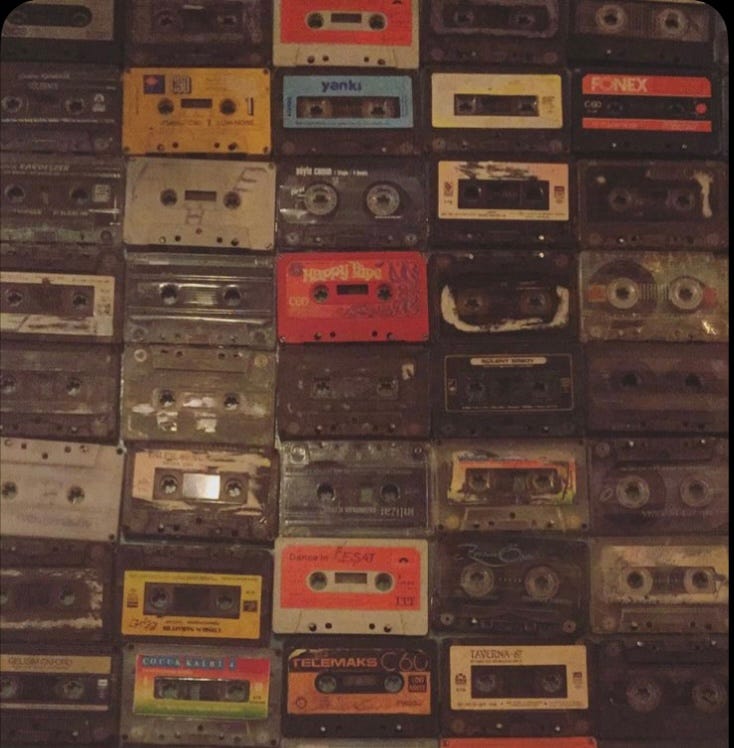
Maybe it’s just me, but lately my feed has been full of these strange AI creations of the 80s and 90s.
Time slipping into slow motion, kids moving through the world like they’re trapped inside a dream sequence no one asked for.
All of it familiar but kind of creepy.
Retro, resurrected.
Watching the decades I lived through suddenly appear in high definition feels disorienting. These videos don’t do the past justice. They try to improve it, smooth it out, turn it into something synthetic and consumable. Which is odd, because I was there. And it wasn’t content. It was life.
I don’t know why, but there’s a part of me that feels protective. Like I want to step in and say hey, easy! those years were not a product. They didn’t need better lighting.
Watching it come back now, rendered through filters and algorithms, feels so strange. Like something living has been taxidermied and put on display.
And I think every Gen X and Millennial person feels a collective unease, not because life was better (though we’re not pretending it wasn’t), but because it unfolded without an audience. And that’s something you don’t realize you have until it’s gone.
There is something so weird about watching people romanticize the era you grew up in. Watching it flattened into something aesthetic, as if it were a mood to borrow.
It’s usually explained away as nostalgia. But when I was a kid, I imagined other decades too — the 50s and 60s lived in my head, unfinished, and that was enough.
Imagination leaves room for mystery. It doesn’t demand accuracy. It doesn’t try to improve the past. It lets it stay incomplete, and maybe that’s the point.
I do understand the pull. I watch shows like Stranger Things too. I get it. Longing moves through culture, reaching backward for what it’s lost. But what’s being borrowed isn’t the time period. I think it’s the freedom that lived inside it.
The 80s and 90s weren’t just colourful. They pulsed.
Neon. Noise and movement. Music spinning like small revolutions. People showed up.
Nothing divided our attention except each other. We leaned into rooms and stayed inside the moment once we arrived.
Ideas passed hand to hand, mouth to ear, breath to breath. You were seen because people actually looked at you. Eye contact was the default. Presence was currency.
We didn’t confuse proximity with intimacy back then. Warmth didn’t need translation. The age of connection has somehow made us all restless — half alive in a blue light.
Nothing asked to be improved. Nothing tried to be timeless. It just was.
It wasn’t curated or cleaned up for approval. It was messy, electric, and alive. And it was ours.
And damn, do I ever miss it.
So when people gravitate toward it now, I don’t think it’s nostalgia. It’s a kind of permission. They’re reaching for something they can feel, but don’t yet have language for.
They aren’t nostalgic for the past. They’re grieving something they never had.
A slower, less surveilled, more human way of being. A life that doesn’t require constant documentation and engagement.
A life that allows for invisibility.
Memories are not an aesthetic. They are proof of life.
There was comfort in not being seen, like the world trusted you to exist without proof. We had room to be unremarkable.
We grew up largely unobserved, with no audience. I don’t think kids today envy our clothes or our hair from those days, which is fair, honestly. What they envy is that our lives weren’t content. That we weren’t meant to be watched.
Maybe it’s the trick of memory, but people genuinely looked happier back then, maybe we actually were, because we could fuck up without it becoming evidence. Nothing followed us home.
No screenshots. No receipts. No cancellations.
Just life, burning forward, unrecorded.
We were bored a lot, but boredom wasn’t a problem to solve. It was a field we could wander into. That’s where a lot of us learned to make things. We wrote. We drew. We played music. We made art without thinking about who might ever see it.
I think the past feels softer because it wasn’t optimized within an inch of its life. Fewer demands. A much larger emotional bandwidth. Our minds simply had room to breathe.
So maybe today’s generation isn’t mourning the past at all. They’re mourning a future they didn’t get.
I can only speak as a Gen Xer, we don’t talk about it much, but I think we all recognize something in each other. A quiet camaraderie. A shared understanding that we grew up in the narrow window before everything changed. Something rare passed through our hands and our hearts. We know we were lucky, even if we didn’t realize it at the time.
That might be the real reason these images keep surfacing. Not to relive the past, but to try to name what’s missing now. Once a generation has lived without being watched, the contrast becomes impossible to forget. So the past keeps getting reanimated through culture, because it held something the present no longer offers.
Which is why these AI-generated versions of the 80s and 90s feel recognizable sure, but unsettling. They can borrow the look, but they can never borrow the feeling.
You can’t recreate a life that wasn’t watched by watching it.
It’s not because we want to keep it to ourselves, but because we still hope, somehow, it can find its way forward.
It was a really great time.
Ordinary and boring and bright and unspectacular, and that’s what made it extraordinary.
We didn’t know it then, but we know it now.
And this time, we’re paying attention.
You perfectly captured it. This was a really wonderful read. Thank you.
Exceptionally written. The contrast between now and before is surprising and the way in which you worded and presented it demonstrates your true talent.